
English| EUR
Suggested for you
More currencies
Choose a language
In the Medina Quarter, the bathhouse is still a weekly habit rather than a holiday treat. This hammam spa treatment marrakech guide sets out how the ritual is structured, how a public hammam beldi differs from a riad spa ritual, and what a first visit asks of you.
Quick answer
A hammam spa treatment in Marrakech is a steam-and-scrub ritual that costs from 10 MAD per person at a local public hammam in the Medina Quarter, with doors open 10:00–20:00 every day. Private riad spas run longer, oil-based versions. Arrive between 10:00 and 12:00; late afternoons fill with neighbourhood regulars. Single-sex schedules vary by establishment, so confirm the men's and women's hours locally.
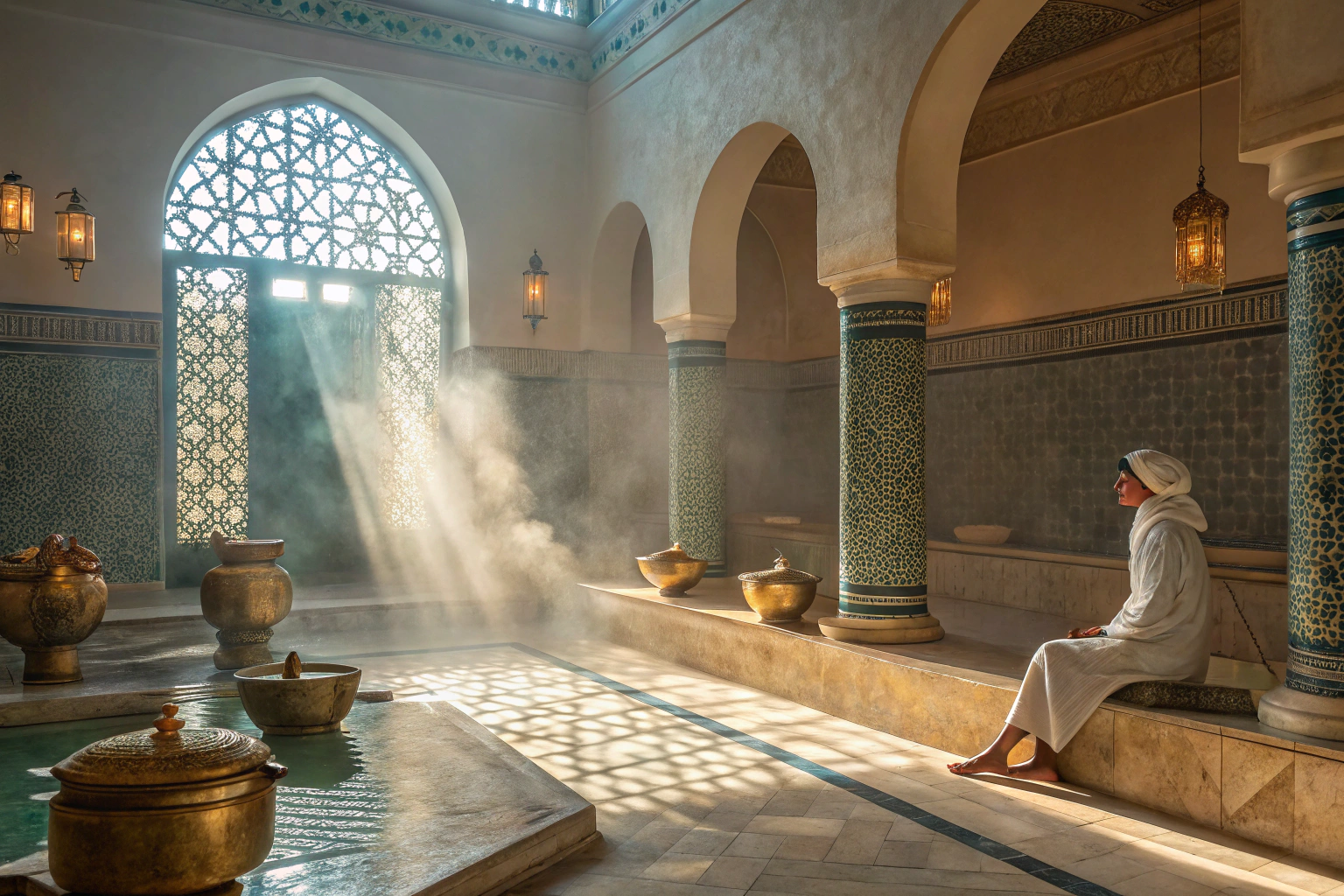
Beneath the floor of a traditional Marrakech bathhouse sits a furnace room, and in it a stoker known as the farnatchi feeds olive pits, wood shavings and carpentry offcuts into a fire that heats the water and the tiled floor above. Some of these furnaces have warmed neighbouring bread ovens for generations. That architecture explains the shape of the hammam spa treatment Marrakech is known for: a slow progression through heated rooms, performed on warm stone rather than a padded table. Two very different experiences share the same name. The hammam beldi is the neighbourhood public bath — a plain entrance, a changing room, then warm and hot chambers where bathers fill plastic buckets from the taps and work through their own supply of savon beldi, the black olive-paste soap. A kessala or tayeb then scrubs guests with a coarse kessa glove, lifting off grey ribbons of dead skin. The riad and hotel version compresses that same sequence into a timed ritual, adding rhassoul clay from the Atlas, argan oil, an orange-blossom rinse and a separate massage room. Both end the same way, with mint tea and a long sit. Context matters more than the treatment menu. Public baths run on single-sex sessions, and the pattern depends on the establishment rather than the city. Many sit anonymously behind unmarked doors in the Medina Quarter, near Mouassine, Dar el Bacha and Riad Zitoun; Hammam Mouassine, built alongside the sixteenth-century Mouassine mosque complex, is among the oldest still in use. Locals treat these rooms as a weekly fixture, not an outing, which is why the atmosphere is practical and conversational rather than hushed. The useful takeaway is to decide which version suits the trip before leaving the riad. Travellers who want unhurried quiet, an attendant who speaks their language and a fixed finishing time tend to prefer a private Marrakech medina spa ritual, reserved in advance. Those after the plainer original walk in with a bucket, a towel and small change. Either way, timing shapes the result: a hammam spa treatment marrakech visitors book for mid-morning runs calmer than a late slot, when the neighbourhood arrives after work and the hot room fills.
“The fire below the floor is why the ritual moves through rooms rather than across a massage table.”
The optimal arrival window for a hammam spa treatment in Marrakech is 10:00–12:00. Arriving during this period allows visitors to avoid the busy late afternoon and evening hours when the local community typically uses the facilities.
—
These hours offer the calmest environment for a traditional experience. Staff are often less rushed during this early window.
Mild 20°C–25°C
Comfortable temperatures make travel pleasant. Expect busier afternoons as tourism increases.
Warm 22°C–28°C
Mild weather supports a relaxing visit. Aim for morning sessions to ensure a quiet atmosphere.
Verdict: For the most tranquil experience, plan your visit between 10:00–12:00 on a weekday during the months of April or October.
Public hammams in the Medina Quarter of Marrakech operate on a consistent daily schedule to accommodate visitors and locals alike.
A traditional hammam session follows a precise warming, cleansing, and exfoliation sequence that takes 60–90 minutes from arrival to final rinse. Each stage prepares your skin for the next, culminating in the signature black-soap scrub that removes dead cells.
Present yourself at the reception desk, pay the 10 MAD standard entry, and collect your token or wristband. Many visitors forget to bring small bills—the attendant may not have change for large notes.
Move directly into the first heated chamber and sit for 10–15 minutes to open your pores. Skipping this step means the scrub won't lift dead skin effectively.
Cover your entire body with savon noir (olive-oil-based black soap) and wait 5–10 minutes while it softens the outer layer. First-timers often apply too little—use more than feels necessary.
Fill the provided plastic bowl from the taps and pour water over yourself to remove all soap residue. The taps mix hot and cold—test the temperature on your wrist before dousing your body.
Lie on the heated marble slab while the attendant uses a rough mitt to exfoliate in firm, rhythmic strokes. Communicate if the pressure feels too intense—attendants adjust based on your tolerance.
Wash off the rolled skin particles with more bucket water, then sit in the cooler antechamber for 5 minutes to let your body temperature normalize. Leaving immediately can cause dizziness.
A public hammam is a shared neighbourhood washing space with its own modesty code, not a tourist attraction. Reading the room keeps you welcome in rooms where locals bathe weekly.
A public hammam supplies the hot rooms and water, but you bring everything else, so assemble these items before you leave your riad.
Everything you need to know about hammam spa treatment marrakech
A traditional hammam is a communal steam bath rooted in Moroccan culture, focusing on deep cleansing through exfoliation using black soap and a kessa glove. This ritual serves as both a social hub and a core component of local hygiene practices in the Medina Quarter.
The standard entry fee for local public hammams is 10 MAD per person. This fee covers basic access to the facilities, though additional costs may apply if you purchase soap or hire a scrub specialist.
To avoid the busy late afternoon and evening periods when locals typically visit, the best arrival window is 10:00–12:00. Arriving during these morning hours ensures a quieter atmosphere for your steam bath experience.
While public steam baths are open to families, the environment may be intense for young children due to the high heat and steam levels. Parents should assess if their children are comfortable with high-temperature environments before visiting.
You should bring your own towel, kessa exfoliating glove, black soap, and a change of clothes. Many visitors also carry a plastic mat or bucket to use during the scrubbing ritual in the hot room.
Public bathhouses operate on a walk-in basis and do not require advance reservations. You can visit any day of the week between 10:00 and 20:00 to enjoy the facilities.
Public hammams offer an authentic, budget-friendly experience focused on traditional cleansing in a communal space. Private establishments, often referred to as luxury spas, provide individual attention, varied treatment menus, and high-end amenities in a more secluded setting.